


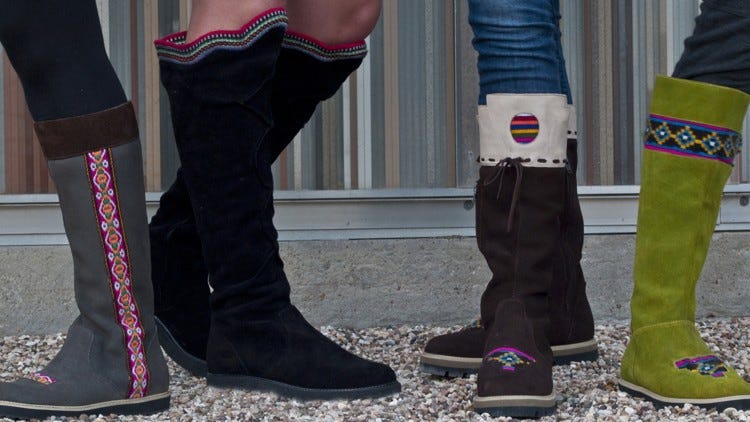
In this file photo, some of the products sold by what then was known as Inca Boot Co. are displayed. The company now known as Fortress Shoes is trying to reorganize through bankruptcy to continue operating in Austin.
An Austin shoe company that brought Peruvian-made boots and shoes to the U.S. market through e-commerce is struggling to stay afloat.


Fortress Shoes closed its sole Austin location in September, vowing in social media posts to continue by reorganizing in bankruptcy.
Article continues below this ad
Judge Shad Robinson is set to decide Thursday whether its plan to do that makes sense for the company and its creditors. The plan calls for the company shedding much of its debt, paying creditors just a fraction of the more than $700,000 it owes them and allowing it to make payments from future profits.
The company that became Fortress Shoes was born after a 2004 backpacking trip through South America by founder Evan Streusand, according to bankruptcy court records. He purchased a pair of boots in Cusco, Peru, and was so impressed with them that he decided to build a company around the traditional boots.
FROM 2011: Austin entrepreneur finds path with Inca-inspired boots
Streusand started Inca Boot Co. in 2010, which became Fortress of Inca as it expanded offerings into shoes and now does business as Fortress Shoes. The company works with craftspeople and factories in Peru to create contemporary footwear while paying fair wages.
Article continues below this ad
“We believe the people that make our shoes are just as important as those that walk in them,” the company says on its website.
Fortress and its attorney did not respond to email requesting comment.
Streusand told CNBC that the company’s first big break came from getting into the J. Peterman catalog and on the global fashion retail website Free People. Fortress doubled its sales in each of the company’s first three years.
The store’s mission resonated with the public and the company eventually was being sold in more than 100 stores including Anthropologie. Fortress also had a robust online presence, with more than 37,000 followers on Instagram, where it marketed its shoes and boots, and another 10,000 on Facebook. The company was active on both platforms as late as last week.
Article continues below this ad
Ultimately, it appears Fortess was a victim of its success.
ALSO READ:Style Matters: Inca Boot Co. rebrands; Helm Boots opens store during SXSW, trunk shows during SXSW
Because of its increasing popularity, the company needed to give large advance payments to its manufacturers. It began to take on debt to cover costs for its wholesale operations to hundreds of retailers nationwide, according to court documents.
Its level of debt proved unsustainable.
Article continues below this ad
According to court records, by 2023 Fortress had more than $1 million in revenue. That fell to more than $800,000 in 2024 and was on pace to do that amount again in 2025 before the company sought protection from its creditors.
Fortress says it owes more than $700,000 to various lenders, including $150,000 to the U.S. Small Business Administration, against around $50,000 in current assets.
Under the plan proposed by Inca Boot Co., the SBA would be repaid $31,873 over 60 payments at a 3.75% interest rate. The remaining $122,000 would be relegated to unsecured claims, which include a total of $663,593 debt. Of that amount, less than 5% will be paid back to unsecured creditors from payments every six months.
The plan would allow the company to recover over time from its previous business plan and reliance on debt. The new plan “focuses on carefully managing inventory to balance demand fulfillment with financial efficiency.”
Article continues below this ad
The plan also allows owners Streusand, Steven Yambra and Dory Benami, to keep their ownership percentages.
Fortress joins tens of thousands of other companies in bankruptcy amid a a surge of filings in the past three years. That surge resulted in a 10-year high in 2025, according to federal courts data. The filings are spurred by business difficulty arising from tighter and more expensive lending rates, higher inventory costs spurred by tariffs, nagging inflation and declining consumer confidence in the economy.
link