
6 Best Business Casual Sneakers in 2026
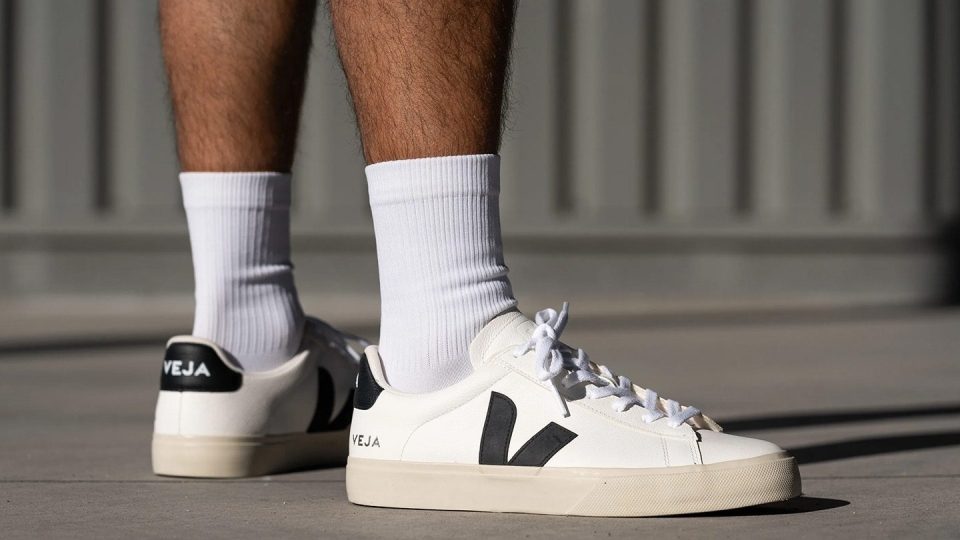
Defining the business-casual style
There isn’t a strict protocol that says what you can or can not wear to comply with the business casual dress code. That also applies to sneakers. We will cover some highlights but again, there will always be people who are doing it differently, be it because the company they work at nurtures a more casual or more business-looking atmosphere, or because of their personal style.
|
Business-casual sneakers: broad guidelines |
|
|
Yes |
No |
|
Clean, sleek design |
Large logos |
|
Neutral colors: one or more similar ones |
(Many) Contrasting colors, especially outsole vs. upper |
|
Can also be minimalist |
Chunky designs, dad shoes |
|
Polished leather, suede |
Mesh with large perforations, multiple layers |
|
Low profile and complementing the outfit |
Attention magnets |
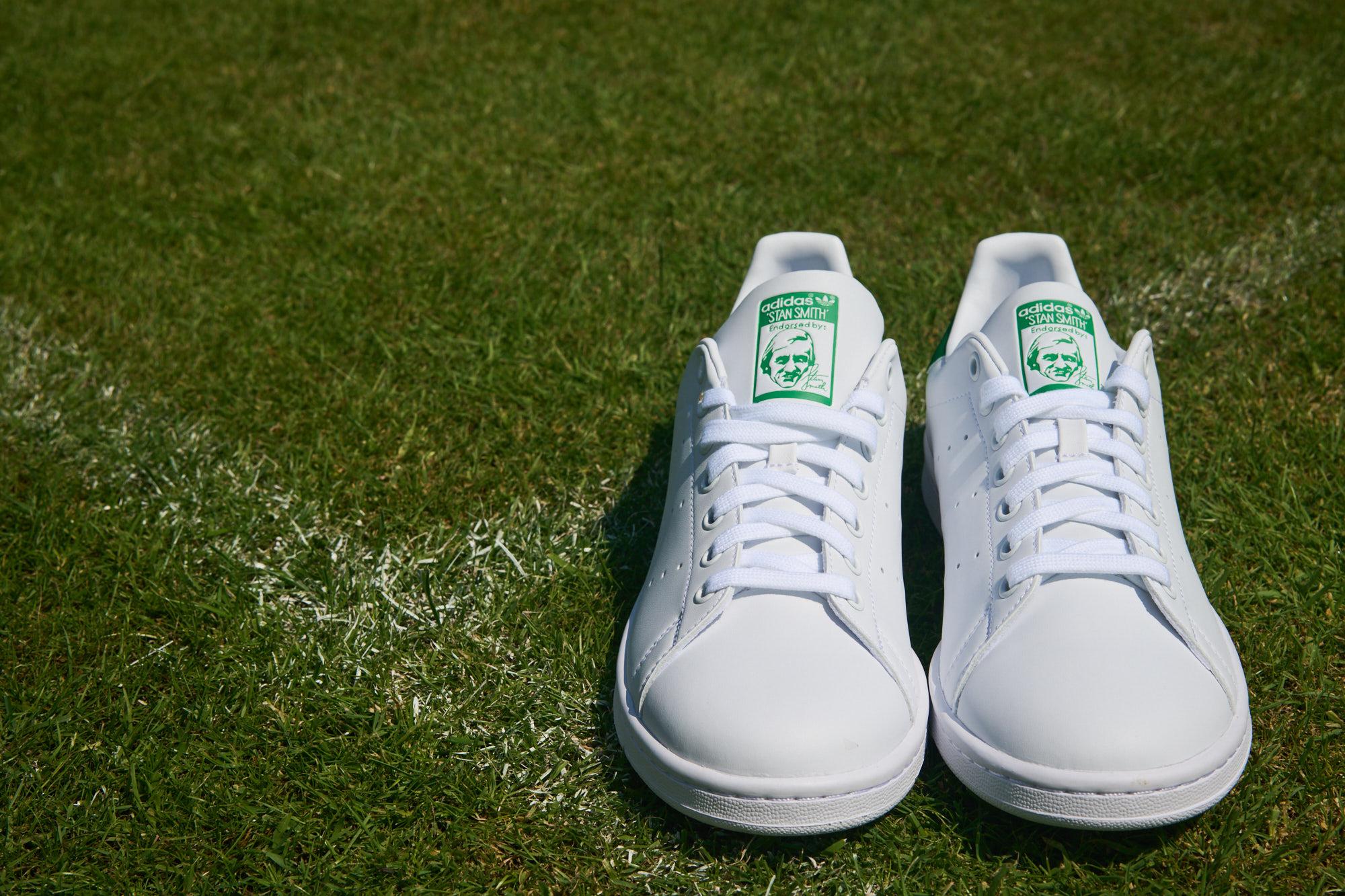
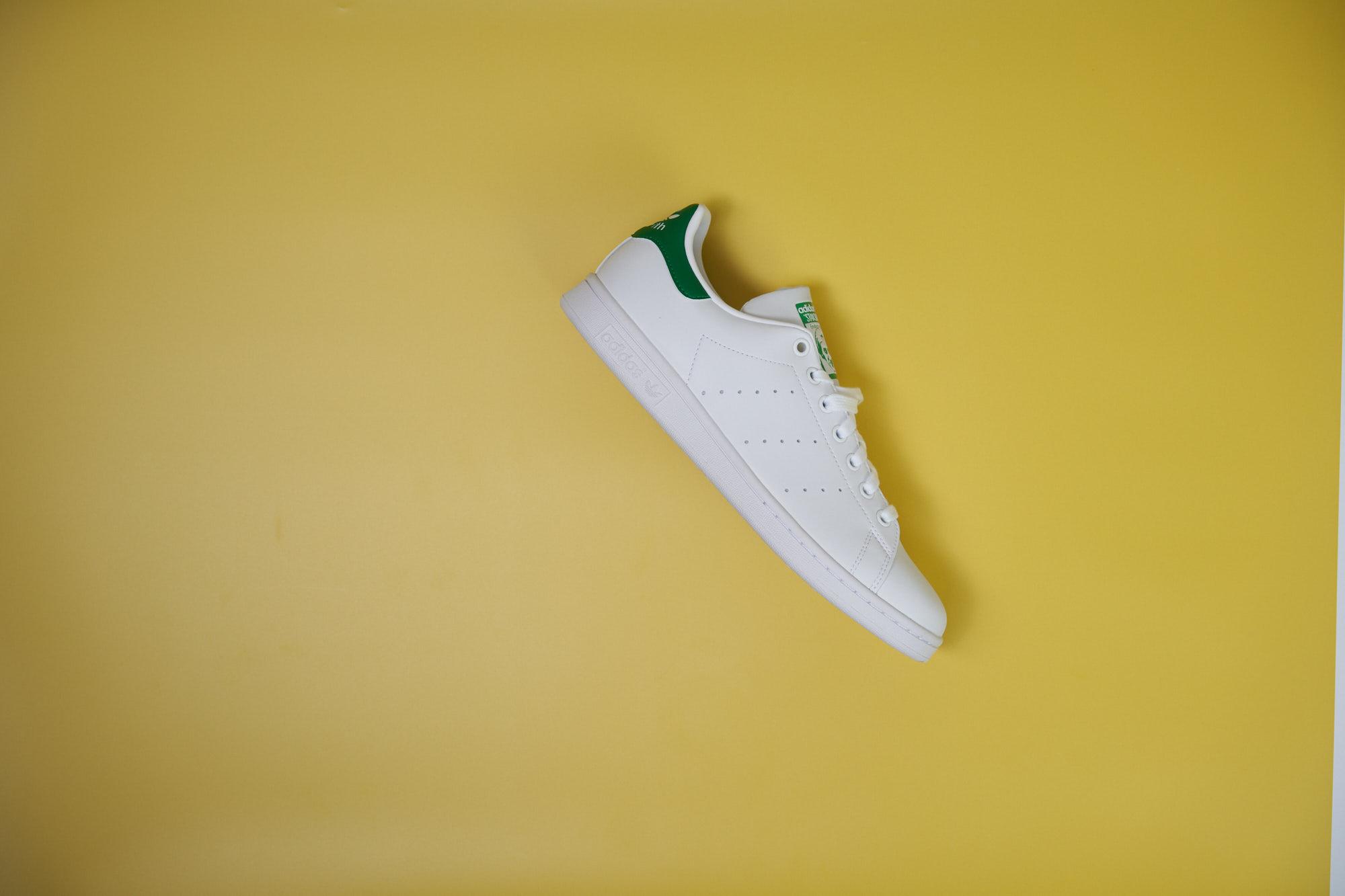
We think that you can’t go wrong with all-white sneakers like Stan Smith, or with leather/suede options that have the upper and the midsole in the same or similar colors. Again, these are some safe bets. Of course, in some environments, Reebok Club C 85 or Adidas Continental will be great, in others, too casual.
Real or fake leather/suede in business-casual sneakers
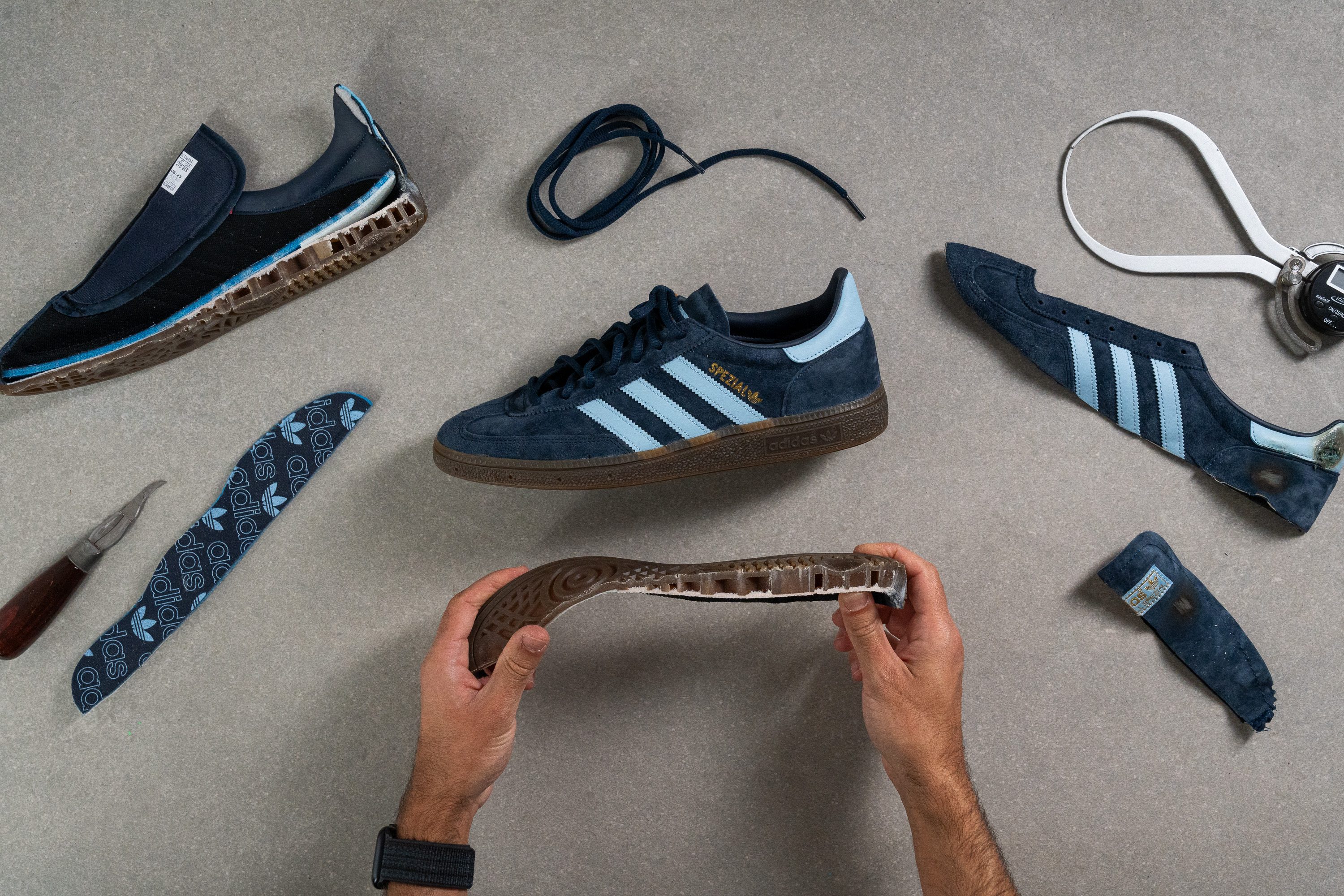
When looking for sneakers that go well with the business-casual style, it’s important for them to have a nice finish or a hint of premium, even if they are budget-friendly. This can come from the materials themselves, their finish, and the overall design. This is why we care about the leather and suede quality.
When we torch the real leather or suede, they smell like burnt hair and become black and dry. We can scratch the burnt area.
When the leather or suede is fake, it bursts into flames and becomes like a glue. It sometimes even has a plasticky smell and look.
Many sneakers feature a combination of real and fake leather or suede. Some minor details can be fake or tongue only, for example. We always note down what the majority of the sneaker is made of, real or fake leather/suede.
Fake leather and suede may be cheaper but also more preferred. The research (Yadav et. al, 2024) has shown that people are more likely to pay a premium price for shoes that have “vegan, sustainable, cruelty-free” or “100% recycled content” highlighted.
How comfortable are business casual sneakers?
To answer this question, we look at a) shock absorption, b) midsole softness, and c) weight. Shock absorption is THE feature to look at when discussing comfort because it tells us how good the sneaker (the midsole) is at dampening the impact. We need that action every time we hit the floor with our heel. Otherwise, all the stress would be sent to our legs and they would hurt (imagine stomping the hard ground barefoot).
This is how we test shock absorption in our lab (ASTM F1976-13 protocol)
The higher the shock absorption, the better, for long-term comfort. It simply means your legs will be stressed less. For comfort, we prioritize sneakers that scored higher than 100 SA on our shock absorption lab test.
We know that people prefer focusing on the softness. It’s THE thing basically everyone notices upon putting the sneakers on. We prioritize shock absorption for obvious (above-explained) reasons, but understand that people love softer shoes in general (Menz, Bonanno; 2021).
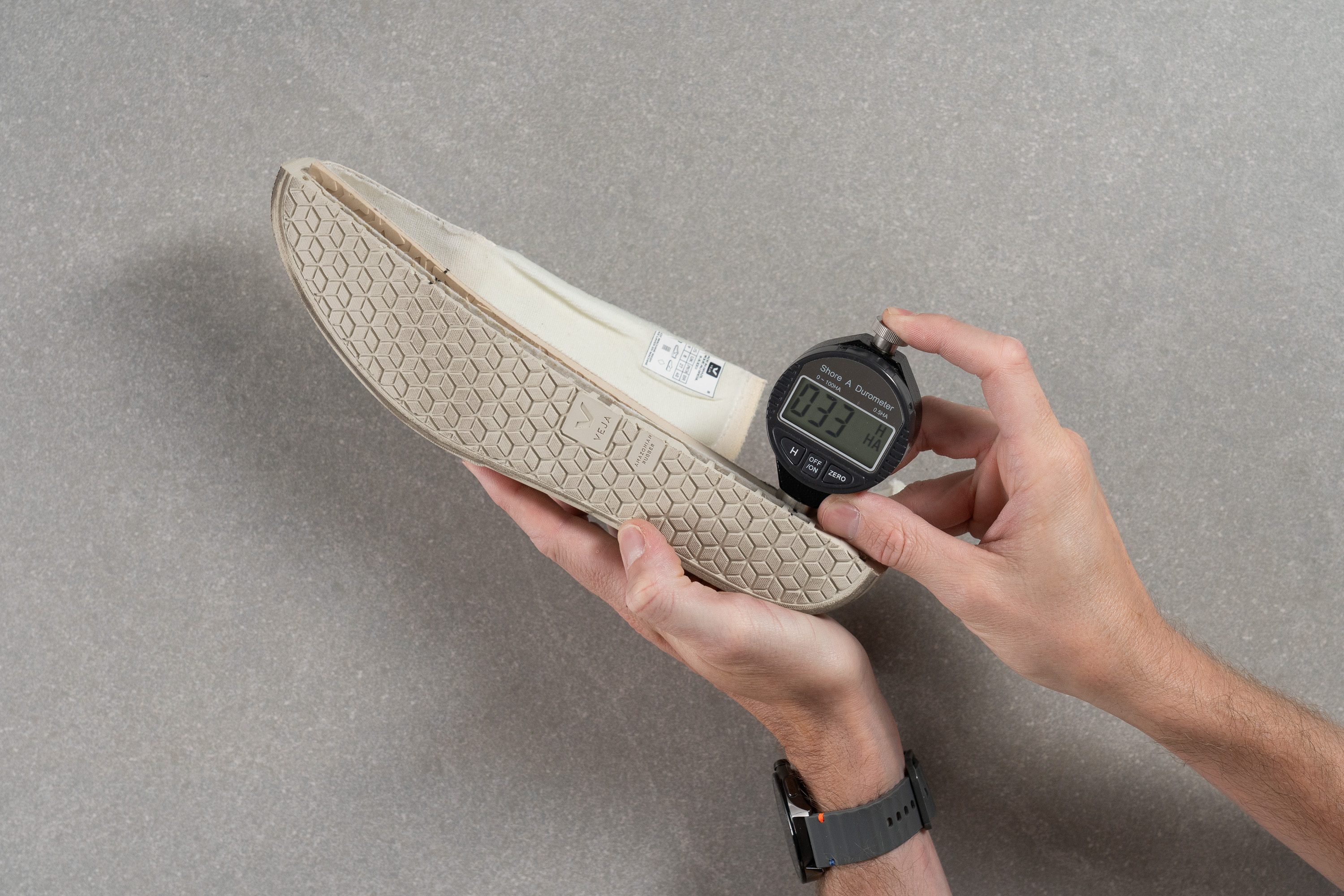
And, if you’re not happy with the provided softness, you can always replace the insoles. We measure the insole thickness in every sneaker and note down whether it’s replaceable or glued down.
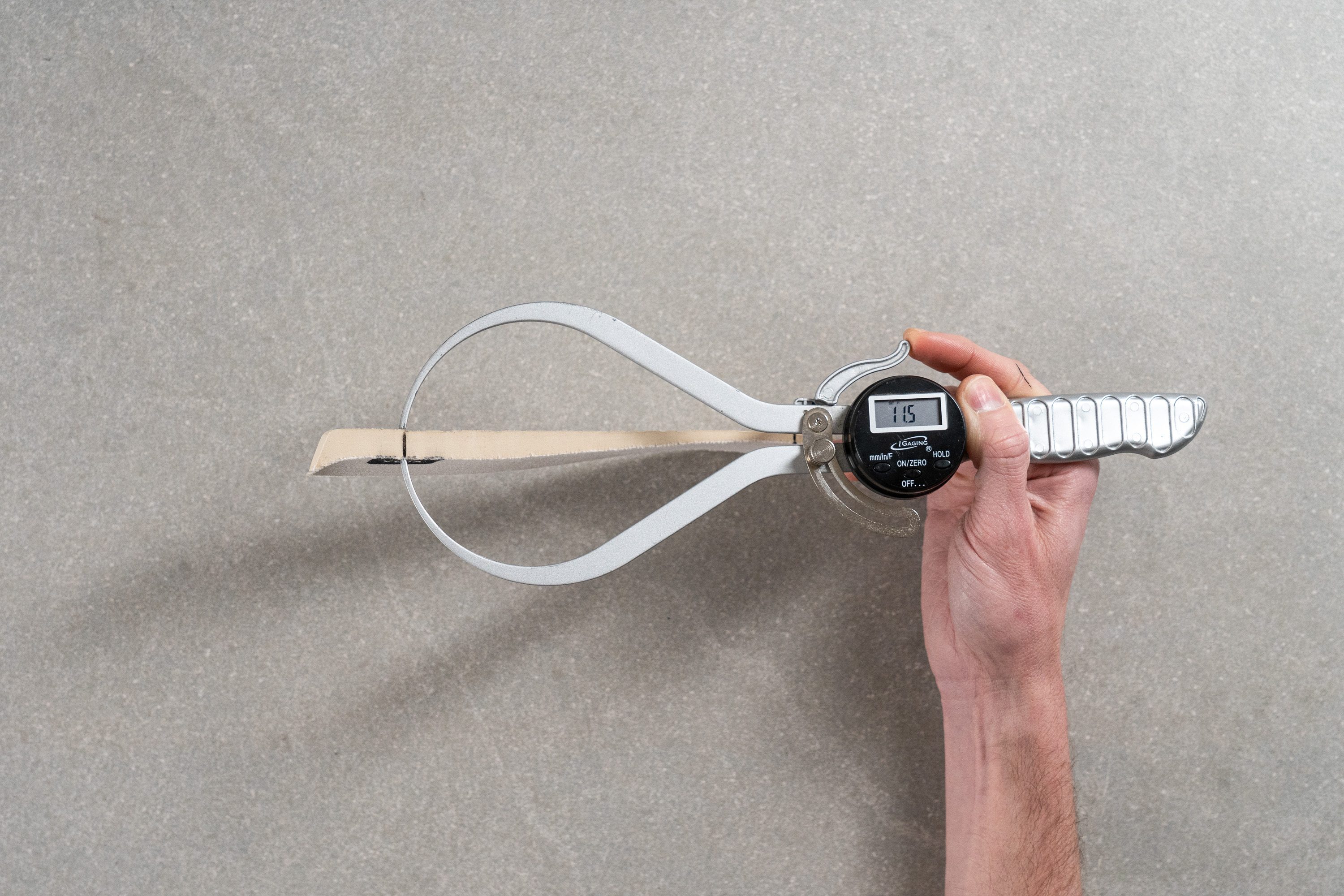
And, finally, we can’t skip the weight. The heavier the sneaker, the more tiring for the feet. Some even feel bottom-heavy, so you can tell from the start that they are not gonna be good for you.
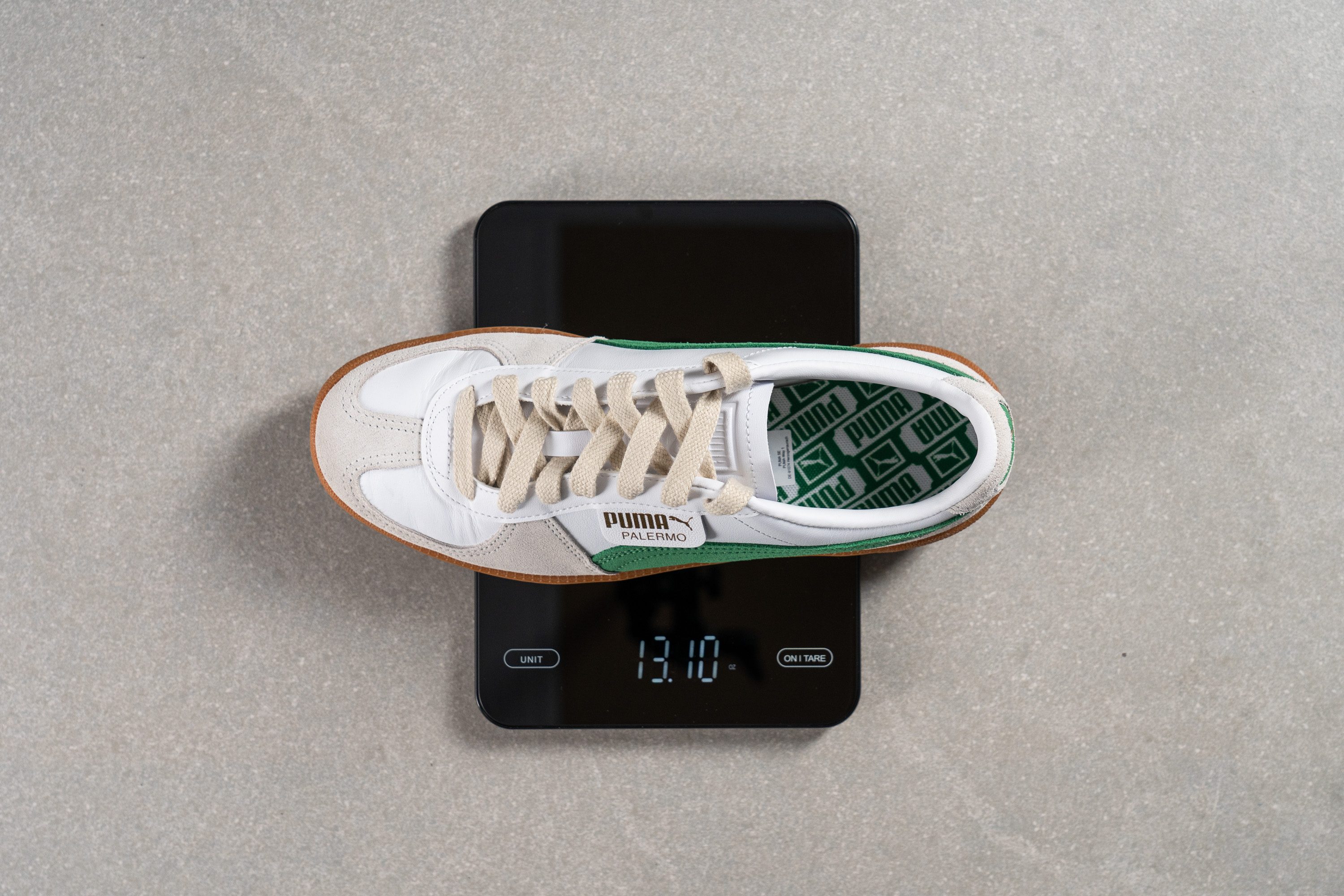
Feet swell after a while: how to find an accommodating fit?
You’ve found a pair of business casual sneakers you like, but you don’t know i,f after 8 hours in them, they will still be comfortable? The best way to find out is by looking at how much room these sneakers offer.
To measure this volume, we developed a special formula that allows us to pour liquid into the sneakers and freeze them. Once everything settles, we end up with a gel mold that resembles the sneakers’ interiors perfectly.
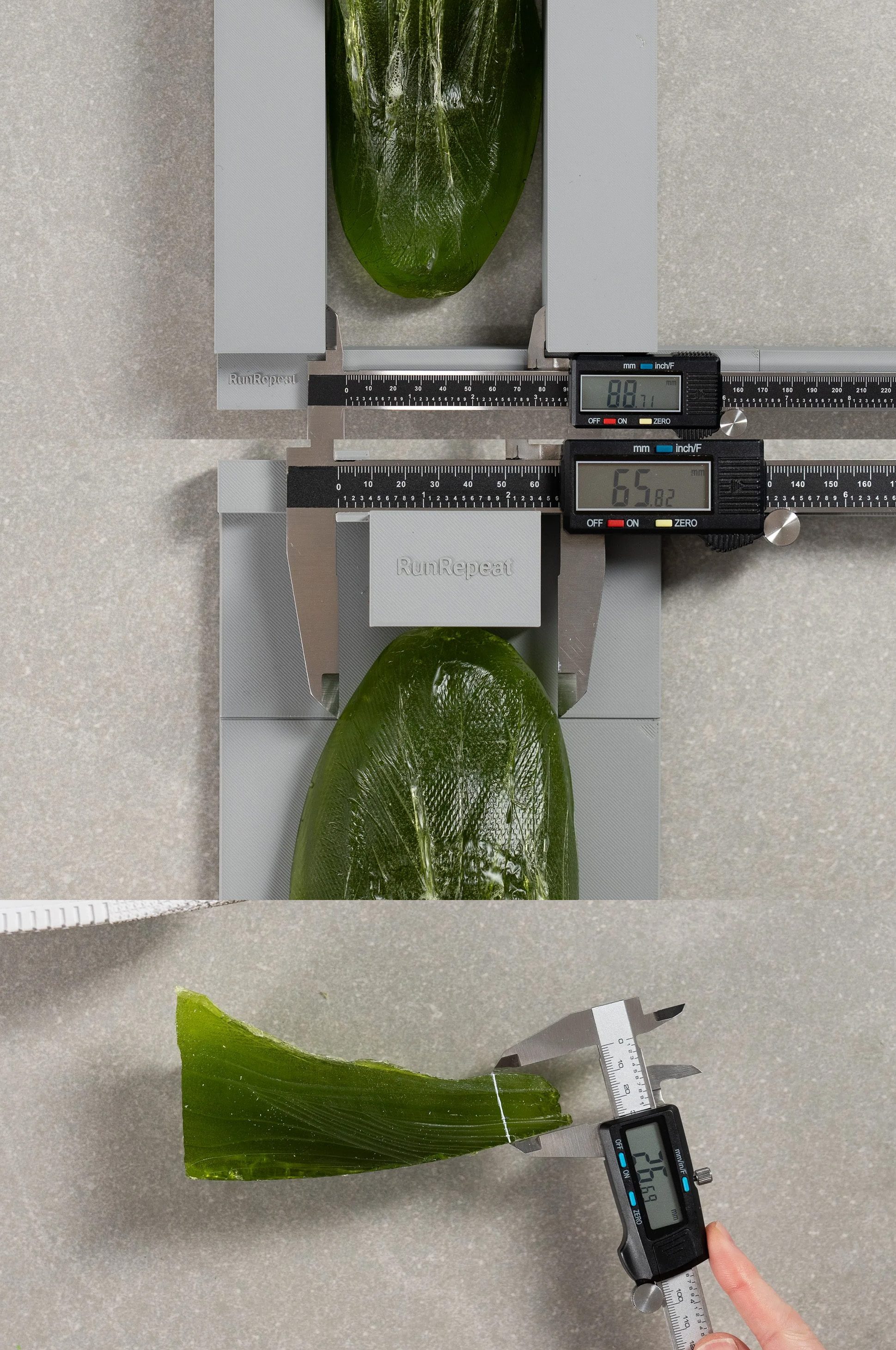
These accurate measurements done at 3 different places allow you to find sneakers that offer less or more room exactly where you need it. Maybe you have a very narrow forefoot and need a pointy toebox, but also your big toe points up and you need more vertical clearance? Simply look at our lab data.
It’s raining: are you safe or slipping and sliding?
Daily beaters that you use to get to work and back need to perform in all weather conditions. We don’t think about this when it’s sunny and dry, but with the first shower, it’s best to stay upright, right?
We use a specialized machine to test the traction of sneakers in wet weather conditions. We simulate the real-life conditions by using a 7-degree wedge, a force of 500N, and wet concrete!
The result of this test is a dynamic coefficient of friction (CoF). The higher it is, the better! Sneakers that have Coa F higher than 0.45 we consider safe for both wet and dry conditions. Moderate traction falls in the 0.25-0.45 range, and it’s safe for dry surfaces but may slip on wet and slick ones.
Durability of business-casual sneakers
Business casual sneakers look polished or sometimes even classy, which is why most of us care about the toebox durability. Why invest in a sneaker that’s gonna look old and worn out thanks to premature wear and tear that was caused by very bad toebox durability?
When testing the durability, we use a dremel. It’s a standardized test, which means we apply the same force, time duration, and RPMs to every sneaker. Once the test is done, we asses the damage on a 1-5 scale (1 for the least durable and 5 for the most durable).
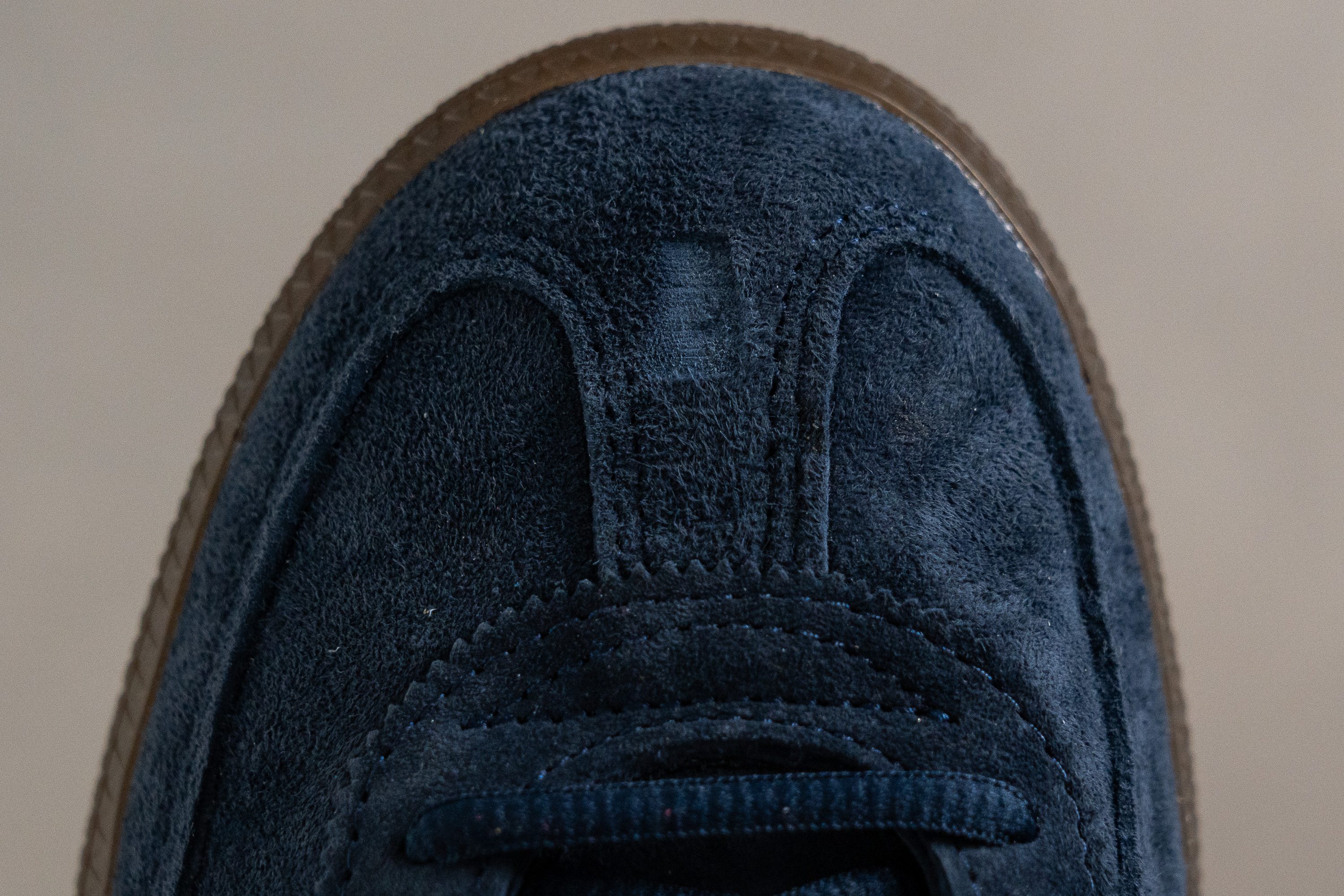
The look of the toebox says a lot but it’s not the only durability test we do. We also test heel padding and the outsole durability. Those may not sound as relevant because they are not cosmetic but we do find them very relevant. After all, the idea is to find one perfect pair, and not to be forced to buy multiple pairs in a short period of time.
Here as well, we assess the damage on a 1-5 scale. We take this a step further when it comes to testing the outsole durability.
Due to the outsole hardness, we’re able to use a tire tread gauge and measure the depth of the dent precisely.
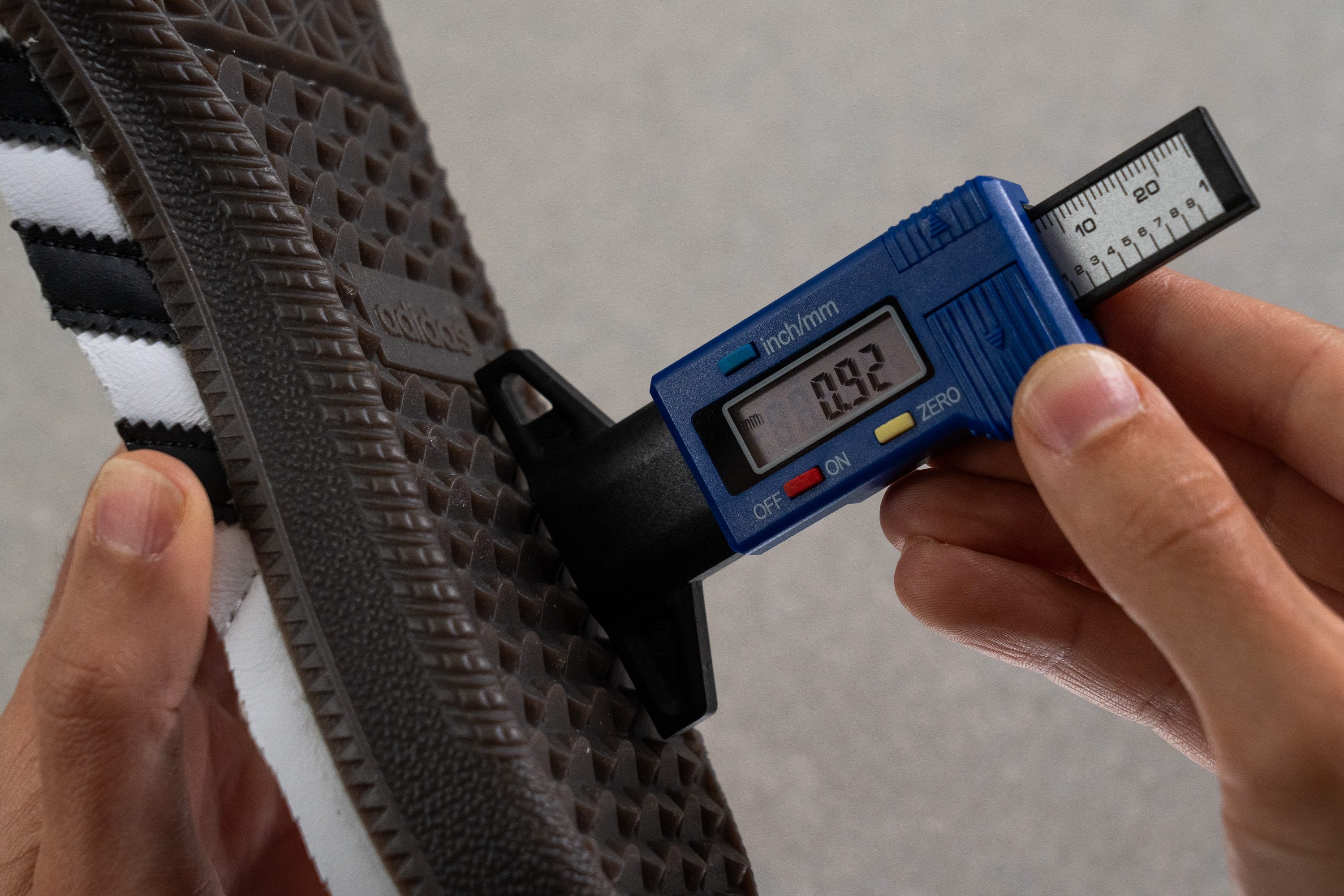
The deeper the hole, the less durable the outsole. This means that, unlike in toebox and heel padding durability tests, lower numbers mean better durability here.
link